
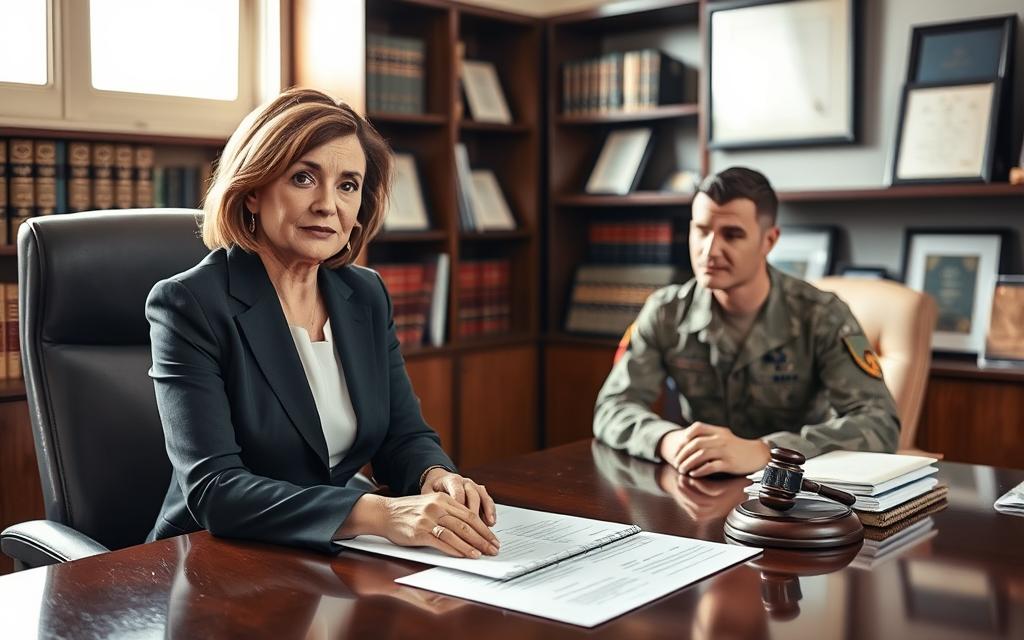
Are you a service member facing the complex world of military divorce in Virginia? You might wonder how to protect your rights and future. Military divorces are different from civilian ones, with their own set of challenges.
Getting through a military divorce needs special knowledge of laws. A Virginia Military Divorce Lawyer knows how to protect your rights. They make sure your personal and work life stays safe.
Military divorces have their own rules, like who gets what and where. The Service Member Divorce Guide helps you understand these rules. It keeps your rights and dignity safe.
Key Takeaways
- Military divorces involve complex federal and state legal frameworks
- Specialized legal representation is key for service members
- Knowing about jurisdiction and benefits is very important
- Being deployed can change divorce cases a lot
- Keeping military benefits safe needs expert help
Understanding Virginia Military Divorce Laws
Military family law is tough for service members and their spouses in Virginia. It’s different from regular divorce laws. You need special legal help and to know the rules well.
Overview of Military Divorce in Virginia
Virginia has special rules for military divorces. These rules are not the same as regular divorces. You need to know about different places and federal laws.
- Military divorce can be filed in three places:
- Where the nonmilitary spouse lives
- Where the service member is stationed
- Where the service member says they live
Key Differences from Civilian Divorce
Military divorces have special legal issues. Service members get special federal laws that civilians don’t. This makes military divorces different.
- Federal laws help military people during divorce
- Rules for dividing military retirement benefits are special
- Being deployed can change when and how you divorce
Jurisdiction Issues for Service Members
Where you file is very important in Military Family Law. The state you choose affects many things like who gets what and child custody.
Service members should talk to a military divorce lawyer. They can help protect your rights during the divorce.
The Role of a Virginia Military Divorce Lawyer
Going through a military divorce is different from regular divorces. It needs special legal help. This is because service members face unique challenges.
Military divorces are complex. They involve both military and civilian laws. A good lawyer knows how to handle these cases well.
Importance of Specialized Legal Knowledge
Lawyers who know about military divorces are very helpful. They understand:
- Federal laws that affect military families
- How military benefits work
- Legal issues when someone is deployed
- How state and federal laws mix
Benefits of Hiring a Military Divorce Lawyer
Having a lawyer who knows about military divorces is a big plus. They can:
- Figure out military retirement benefits correctly
- Help plan for custody
- Keep healthcare and military benefits safe
- Deal with tricky legal issues
Questions to Ask When Choosing a Lawyer
When picking a lawyer, ask these questions:
- What experience do you have with military divorce cases?
- Do you know Virginia’s military divorce laws?
- How will you handle my case if I’m deployed?
- How will you protect my military benefits?
Even though military legal offices offer free help, some cases need a private lawyer. This ensures a service member’s rights are fully protected.
Preparing for a Military Divorce
Getting ready for a military divorce needs careful planning. Military life’s unique challenges require a detailed plan for divorce. This includes legal and emotional steps.
Military divorces are different from civilian ones. Service members must act fast to protect their rights and well-being. This is a big change.
Gathering Necessary Documentation
A good Divorce Checklist for Military families should have important papers:
- Military service records with dates of service and rank
- Leave and Earnings Statements (LES)
- Military retirement point documentation
- Housing allowance records (BAH/BAS)
- Thrift Savings Plan (TSP) statements
- Military life insurance policy details
- Comprehensive asset and debt records
Understanding Your Legal Rights
Legal Rights for Military personnel in divorce are key. The Servicemembers Civil Relief Act helps a lot. It lets service members:
- Postpone legal proceedings during active duty
- Protect against default judgments while deployed
- Ensure fair division of military retirement benefits
- Access military legal assistance resources
Emotional Preparation for Service Members
Divorce Planning for Military families is more than just papers. Emotional resilience is very important. It helps with personal and military duties. Good support includes:
- Military OneSource counseling
- Military chaplain support services
- Peer support groups for service members
- Mental health professionals experienced with military divorces
Being well-prepared for military divorce helps service members feel more confident and clear.
Residency and Jurisdiction Considerations
Military divorces are different from regular divorces. Knowing about residency and jurisdiction is key for service members. It helps them understand the legal steps they must take.

Service members have choices on where to file for divorce. The law lets them choose from many places. This choice can change how the divorce goes.
Virginia Residency Requirements
To get a divorce in Virginia, you must meet certain rules. Service members or their spouses need to:
- Live in Virginia for at least six months
- Have a legal home in the state
- Be stationed in Virginia during the divorce
Federal Jurisdiction for Military Cases
Military divorces follow both state and federal laws. Service members can file in:
- The state where the nonmilitary spouse lives
- The state where they are stationed
- The state where they legally live
The Servicemembers Civil Relief Act (SCRA)
The SCRA helps protect service members in court. It includes:
- Stopping court actions while serving
- Keeping them safe from default judgments
- Letting them pause legal actions for military duties
Knowing about these rules helps service members handle their divorce. It also protects their rights while they serve.
Child Custody Issues in Military Divorce
Military family divorce is different. It has special rules for child custody. These rules help protect the child and the service member’s rights.
Child Custody Military cases have many important factors. Courts focus on the child’s well-being. They also consider the special needs of military families.
Factors Affecting Custody Decisions
- Parent’s ability to provide stability
- Child’s relationship with each parent
- Impact of possible deployments
- Maintaining a steady educational setting
- Flexible ways to stay in touch
Using Mediation for Custody Disputes
Mediation is a team effort in Military Family Divorce. It helps parents make agreements that work with their military schedules.
The Impact of Deployment on Custody
Deployment can change custody plans. The Virginia Military Parents Equal Protection Act (VMPEPA) helps service members. It makes sure deployments don’t hurt their rights forever.
Important things to think about during deployment include:
- Temporary changes in visitation
- Ways to stay in touch virtually
- Quick legal actions
- Keeping the parent-child bond strong
Service members should plan ahead for custody issues. They should make detailed parenting plans for military challenges.
Division of Military Benefits and Assets
Dividing property in a military divorce needs special knowledge and planning. Service members face unique challenges. A detailed Divorce Case Strategy is key to protect their money.
Military retirement benefits are a big part of dividing property. The Uniformed Services Former Spouse Protection Act (USFSPA) guides how to split military retirement pay during divorce.
Understanding Military Retirement Benefits
Military retirement benefits are based on years of service and how long you were married. Important points include:
- Figuring out the share of retirement pay for the marriage
- Using the coverture fraction method
- The 10/10 rule for direct payments
Dividing Joint Assets and Debts
Virginia uses an equitable distribution method for dividing marital assets. Military families need to think about special properties:
- Military housing
- Vehicles and personal items
- Joint bank accounts
- Military life insurance policies
Tax Implications for Service Members
Divorce can make taxes complicated for military people. Key things to remember are:
| Asset Type | Tax Consideration |
|---|---|
| Retirement Pay | Taxable income for the spouse getting it |
| Thrift Savings Plan | Potential tax issues during division |
| Property Transfers | Potential tax issues |
Creating a smart plan for dividing military property needs careful thought and expert advice. Service members should talk to a military divorce lawyer to safeguard their money.
Alimony and Spousal Support
Military divorces have special challenges for spousal support. It’s important to get help from a lawyer who knows about military law. This helps families understand the rules.
Factors Influencing Alimony Decisions
Virginia courts look at many things when deciding on spousal support. They consider:
- How long the couple was married
- How much money each person can make
- The lifestyle they had during the marriage
- Any sacrifices made for the military
- What each person needs financially
Duration and Modification of Spousal Support
There are different kinds of spousal support in military divorces. Temporary support helps during the transition. Rehabilitative support helps a spouse get a job. Permanent support might be for very long marriages.
Support orders can change if there are big life changes. For example:
- Big changes in income
- If the person getting support gets remarried
- When someone retires from the military
- Big changes in money situation
Special Considerations for Military Spouses
Military spousal support needs special care. The Defense Finance and Accounting Service (DFAS) helps with payments. Lawyers are key in making agreements that fit military life.
Service members must know they have to support their spouse while apart. Court orders make sure support is followed.
Child Support Calculations
Understanding child support in a military divorce is key. Virginia has special ways to figure it out. Service members need to think about their finances carefully.

Virginia uses a clear method to figure out child support. It looks at important things for military families. The main goal is to keep kids financially stable during and after divorce.
How Virginia Determines Child Support
Virginia has rules for figuring out child support. It looks at:
- Combined gross monthly income of both parents
- Number of children needing support
- Custody details
- Other child-related costs
Special Rules for Military Families
Military folks have special rules for child support. Their divorce plans must consider:
- Basic Allowance for Housing (BAH) counts as income
- Special pay and bonuses are included in support
- Being deployed doesn’t automatically lower support
Modifying Child Support Orders
Military families can ask to change child support if things change a lot. Big income changes, moving, or custody changes might mean a legal update is needed.
| Modification Trigger | Potential Impact |
|---|---|
| Income Change | Support amount might change |
| Custody Shift | Support might be reallocated |
| Deployment Relocation | Support might be adjusted |
Service members should talk to lawyers to make sure child support is right. Keeping good records and talking openly helps keep support fair.
Deployment and Divorce Processes
Military service members face unique challenges when navigating divorce during deployment. They need to know about Legal Assistance Military resources. They also need to plan carefully to protect their personal and family interests.
Deployment can make divorce proceedings very complex. It creates legal scenarios that need careful handling. Service members have special protections under federal laws to help them during military service.
How Deployment Affects Divorce Proceedings
The Servicemembers Civil Relief Act (SCRA) offers important protections for deployed military personnel. Key points include:
- Requesting a stay or postponement of court proceedings
- Protecting against default judgments during deployment
- Ensuring fair representation in legal matters
Staying Communicative During Deployment
Good communication is key in managing Divorce Resources Military during deployment. Strategies include:
- Setting up clear communication plans before deployment
- Using digital communication tools
- Choosing a trusted person with power of attorney
Managing Custody Issues During Deployment
Military parents face special custody challenges. The Virginia Military Parents Equality and Protection Act (VMPEPA) helps protect their rights during deployment.
Service members can:
- Give temporary visitation rights to family members
- Include virtual visitation options
- Stop permanent custody changes just because they’re deployed
Talking to military legal assistance professionals is helpful. They can guide service members through these complex legal issues. This helps protect family relationships during tough times.
Mediation and Alternative Dispute Resolution
Military divorces are special and need flexible ways to solve problems. A service member attorney can guide you through these options. They help find ways other than going to court.
More and more, military families are choosing mediation for divorce. It’s a smart choice for those who want a peaceful way to end their marriage.
Benefits of Mediation in Military Divorce
Mediation has big pluses for military couples:
- It fits around deployment schedules
- It saves money on legal fees
- It solves problems faster
- It keeps things private
- It lets you control the outcome
How to Prepare for Mediation
To do well in mediation, prepare well:
- Get all your financial papers ready
- Think about what’s important to you and your partner
- Learn about laws that affect military families
- Talk to a lawyer who knows about military law
- Be ready to work together
When to Consider Alternative Solutions
Not every divorce is right for mediation. Pick the right method based on:
| Scenario | Recommended Approach |
|---|---|
| Low-conflict situation | Mediation |
| High-conflict dynamics | Collaborative divorce or litigation |
| Complex asset division | Arbitration or attorney negotiation |
Military families can find good solutions with the right choice of dispute method. It meets both parties’ needs and respects their service.
The Divorce Process in Virginia
Getting a military divorce in Virginia means knowing special legal steps. It’s different from regular divorces. Military folks face unique rules and challenges.
Virginia has two types of divorce: fault and no-fault. Military families have special rules. It’s key for military folks to know these rules for a smooth divorce.
Overview of the Divorce Process
Military divorces in Virginia have important parts for service members to know:
- Residency needs of six months
- Complications with where to file
- Special rules under the Servicemembers Civil Relief Act (SCRA)
Key Steps in Filing for Divorce
Service members need to follow these main steps for a military divorce:
- Find the right place to file
- Make and file the divorce complaint
- Send out divorce papers (thinking about deployment)
- Talk about assets and custody
- Finish the divorce decree
Timeline Expectations for a Military Divorce
The guide says military divorces can take a lot of time:
- Uncontested divorces: 3-6 months
- Contested divorces: 9-18 months
- Deployment can make it take longer
Having a good military divorce lawyer helps a lot. They make the process easier and protect your rights.
Legal Resources for Service Members
Going through a military divorce is tough. But, there are many Divorce Legal Aid and Divorce Resources Military to help. These resources give important guidance and support during a hard legal journey.

Military service members get special legal help for divorce. This help ensures they know their rights and choices.
Military Legal Assistance Resources
Every military base offers free legal help for active-duty members. They provide:
- First divorce talk services
- Legal advice on military rules
- Mediation help
- Guidance on document prep
- Notary services
Support Networks and Organizations
Many groups offer big support during military divorces:
- Military OneSource: 24/7 counseling and resource tips
- Installation family support centers
- Military and Family Life Counselors
- Veterans service groups
Helpful Websites and Hotlines
Key resources for military divorce support are:
- Military OneSource (www.militaryonesource.mil)
- Armed Forces Legal Services Locator
- DFAS website for retirement info
- TRICARE healthcare help
Using these Divorce Resources Military helps service members face legal challenges with confidence and support.
Common Challenges in Military Divorces
Military divorces are very complex. They need special legal help. Service members face unique problems in family law, like custody and deployment.
Divorce can be tough on families, even more so for military ones. It’s key to know the legal rights of military people. This helps protect their rights as parents and individuals.
Addressing Parental Alienation
Parental alienation is a big issue in military divorces. It’s important to spot the signs early to keep parent-child bonds strong:
- Sudden child resistance to parental contact
- Coached negative statements about a parent
- Interference with communication channels
- Fabricated allegations against a parent
Getting legal advice is vital in these tough cases. Military parents need to keep in touch and document everything.
Managing Long-Distance Custody Arrangements
Deployment and moves make custody hard. Good strategies include:
- Creating detailed parenting plans
- Using tech for regular talks
- Planning visits when on leave
- Being flexible in co-parenting
Legal Rights During Deployment
Service members have special legal protections in military divorces. The Servicemembers Civil Relief Act (SCRA) is very important:
| Legal Protection | Description |
|---|---|
| Proceedings Stay | Ask to pause legal actions while on duty |
| Default Judgment Protection | Stop automatic legal decisions when absent |
| Custody Modification Limitations | Stop permanent custody changes just because of deployment |
Dealing with these issues needs smart legal rights military knowledge. Getting help from a lawyer is key to fair treatment during divorce.
Next Steps After Divorce
Life after divorce needs careful planning and emotional strength, more so for service members. Military divorce planning covers many important areas for personal and work life changes.
Military folks face special challenges during divorce. Getting good family law advice is key during this big change.
Post-Divorce Adjustments for Service Members
Service members need to tackle several big tasks after divorce:
- Update military records and benefits
- Revise emergency contact info
- Change estate planning papers
- Update DEERS for dependent benefits
Establishing New Custody Agreements
Setting up new custody plans is very important. Things that might change include:
- PCS orders
- Work schedule changes
- Deployment status changes
- Child’s growing needs
The Importance of Financial Planning
After divorce, fixing your finances is a top priority. Important steps include:
- Make a new budget
- Deal with military retirement
- Build up emergency savings
- Pay off joint debts
Military help like counseling and financial advice is very helpful. It helps service members get back on their feet and feel strong again.
Conclusion: Taking Charge of Your Future
Military divorce is tough, but you can handle it. Getting advice early can help a lot. It helps protect your rights and keeps you safe.
Having a lawyer is key for military folks. They help you understand the law. Places like Military OneSource offer free help to start.
Being in the military makes you strong. You can use this strength to get through your divorce. With the right help, you can grow and move forward.
Your service shows you’re dedicated and flexible. Use this skill for your divorce. Get the help you need and look forward to a new chapter.