

What if your marriage ends and your immigration status is at risk? You need a lawyer who knows both divorce and immigration law. A good Immigration Divorce Attorney can help you through this tough time.
Divorce can change your immigration status a lot. It’s like walking through a minefield. You need help from someone who knows both family law and immigration rules.
A Divorce and Immigration Lawyer is very important. They help you know your rights and protect your legal status. They guide you through the laws of divorce and immigration.
Key Takeaways
- Divorce can significantly affect immigration status and legal rights
- Specialized legal representation is key in immigration divorce cases
- Knowing both family and immigration law is vital
- Protecting your legal status needs expert legal help
- Immigration divorce attorneys offer full legal support
Understanding the Role of a Divorce and Immigration Lawyer
Divorce and immigration lawyers are very important. They help people with tough legal issues. These issues mix personal problems with immigration status.
These lawyers give full legal help. They know how to deal with hard cases. These cases happen when personal life meets immigration rules.
Definition of Services
A divorce and immigration lawyer does many things. They help protect your legal rights:
- They help in divorce cases.
- They check how immigration status changes in divorce.
- They help with visa changes.
- They keep you safe from deportation.
- They work with both family court and immigration.
Importance of Specialization
Getting advice from a lawyer is key in these cases. Lawyers who know both family law and immigration are best. Regular lawyers might miss important details that could hurt your case.
Choosing a lawyer who knows both areas is smart. They can spot problems and plan ahead. This keeps you safe in both personal and immigration matters.
Getting advice early can save you from big mistakes. It helps you know how to move forward in tough legal situations.
Why You May Need Both Divorce and Immigration Legal Help
Divorce and immigration law are very complex. Immigrant spouses need special help to keep their rights and status. This is called Visa Divorce Help.
Divorce can change an immigrant’s legal status in the U.S. It’s important to know how. This helps protect Spousal Rights Immigration.
Impact of Divorce on Immigration Status
Divorce can make things hard for immigrants. It’s true for those with certain visas:
- Spousal visa holders (K-1 or K-3) may lose legal status if divorced before adjustment of status
- Conditional green card holders face additional challenges in removing residency conditions
- Pending naturalization applications might be scrutinized more closely
Legal Rights of Immigrant Spouses
Immigrant spouses have important legal rights during divorce:
- Protection under the Violence Against Women Act (VAWA)
- Ability to self-petition for immigration status
- Rights to marital property and support
- Protection against deportation threats
Getting help from a lawyer is key. Professional Visa Divorce Help keeps immigrant spouses safe. It also helps avoid bad immigration problems.
Common Immigration Issues During Divorce
Divorce can make things very complicated for immigrants in the U.S. They need to understand Residency Divorce Law well. This law has many rules that can change an immigrant’s status.
Immigrants going through divorce face big challenges. They need help with Immigration Case Support. The mix of family law and immigration rules is tricky and risky.
Residency and Visa Concerns
Keeping legal status is very important for immigrants during divorce. They face several big challenges. These include:
- Keeping conditional residence after the marriage ends
- Dealing with visa expiration risks
- Handling adjustment of status applications
- Managing travel restrictions during legal fights
People with marriage-based visas must prove their marriage was real. The I-751 petition is key to remove conditional status. They need strong evidence of a good-faith marriage.
Citizenship Application Complications
Divorce can mess up plans for citizenship. Important things to think about include:
- Potential changes in residency requirements
- Evaluating continuous residence eligibility
- Addressing possible good moral character assessments
- Managing USCIS scrutiny of marriage legitimacy
Getting help from a lawyer is very important. Immigrants need to tackle these complex issues. They must protect their residency and citizenship chances.
The Intersection of Family Law and Immigration Law
Understanding legal rights in divorce and family law is complex. It needs a deep look at how different laws work together. Family and immigration laws often mix in ways that affect people and families a lot.
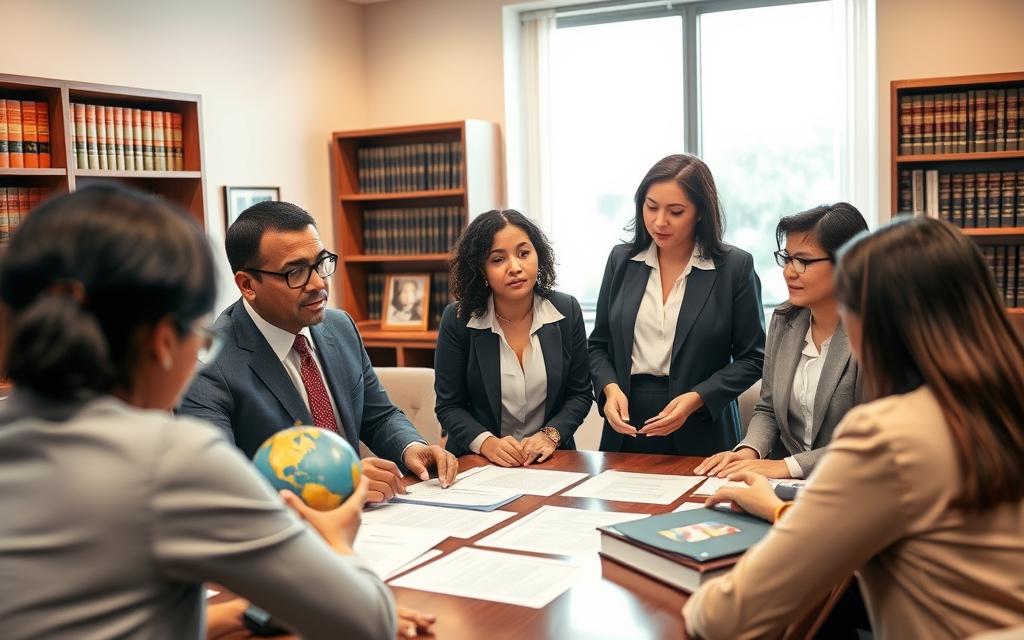
Divorce and immigration laws are two different systems. Family law is mainly for states, while immigration law is for the whole country. This makes a special legal area that needs special knowledge.
Family Law Fundamentals
Family law is key in divorce. It covers:
- How to split property
- Deciding who gets custody of kids
- How to figure out spousal support
- What makes a divorce no-fault or fault-based
Immigration Law Essentials
Immigration law deals with important things like:
- Rules for different visas
- How to adjust your status
- What you need to become a citizen
- What happens in removal proceedings
Legal Protections for Immigrant Families
Immigrant families have special legal help. This includes Violence Against Women Act (VAWA) protections. There are also U visa options for victims of crime. And, there are rules that keep family courts from telling the feds about immigration status.
It’s very important to know how family and immigration laws work together. This helps protect rights and makes sure legal processes are fair.
How to Choose the Right Lawyer for Your Needs
Finding the right lawyer for divorce and immigration law is key. The right lawyer can protect your rights and help you win your case.
When looking for a lawyer, think about a few important things. These will help you choose the best lawyer for you.
Critical Factors in Legal Representation
Choosing a lawyer means looking at several important things:
- They should know a lot about divorce and immigration law.
- They should have handled cases like yours before.
- They must be licensed and have good credentials.
- Look at what other clients say about them.
- They should talk clearly and speak your language.
Essential Questions During Consultations
Getting advice from a lawyer is very important during the first meeting. Make a list of questions to ask:
- What experience do you have with cases like mine?
- How might my divorce affect my immigration status?
- What legal plan do you suggest for me?
- What are the possible risks and what might happen?
- How much will you charge and what services are included?
| Consultation Aspect | Recommended Approach |
|---|---|
| Initial Meeting | Free or reduced-cost consultation |
| Case Complexity | Detailed case review and possible strategy |
| Communication | Clear explanation of legal processes |
Pro tip: Meet with several lawyers to compare and find the best one for your case.
Financial Implications of Divorce on Immigration
Going through a divorce when you’re dealing with immigration is tough. You need to plan carefully. Knowing how to handle your legal status and personal life is key.
Getting a divorce can affect your money in big ways. It can change how you live now and in the future. You might face new costs and money problems.
Costs Involved in Legal Proceedings
Legal fees for divorce and immigration can be high. You might pay for:
- Attorney fees for divorce representation
- Immigration application filing fees
- Document translation and authentication
- Medical examination costs
- Court filing expenses
If money is tight, there are ways to get help. You can:
- Look for legal aid organizations
- Find pro bono services
- Get fee deals that change based on income
- Work out payment plans with lawyers
Impact on Long-Term Immigration Status
Divorce can make money problems worse for immigrants. The I-864 Affidavit of Support is a big deal. It means you owe money to your sponsor.
Things to think about include:
- Changes in how you can become a citizen
- Work permits
- Travel rules
- How your immigration status might change
Getting good advice and planning ahead can help. Knowing all about your financial situation is important. It helps protect your personal and immigration rights.
Navigating Complex Cases
Divorce can get very complicated when countries and laws are involved. An international divorce attorney is key in these tough situations. They offer important help for those dealing with unique legal issues.
Handling divorce cases needs special skills, even more so when different laws apply. These situations need careful planning and a deep understanding of international laws.
Cases Involving Domestic Violence
Domestic violence makes divorce and immigration even harder. The Violence Against Women Act (VAWA) helps a lot. It offers several legal ways to protect immigrant victims:
- Self-petitioning options for abused spouses
- Independent immigration status applications
- Work authorization opportunities
- Potential public benefits access
An experienced international divorce attorney can guide victims through their rights and the legal system safely.
International Divorce Considerations
Cross-border divorce cases have many tough parts that need special legal help:
- Determining the right legal place to handle the case
- Understanding foreign divorce decrees
- Managing international child custody disputes
- Handling property division across borders
The Hague Convention helps with international child custody. But, getting professional help is key to successfully dealing with these complex legal issues.
Good legal help can really help solve international divorce problems. It protects rights and ensures fair outcomes in different legal systems.
The Immigration Process After Divorce
Going through immigration after a divorce can be tough. Immigrant spouses need to handle their legal status carefully. This is to avoid problems with their residency or visa.
They must plan well and use the right strategies. This is key for a smooth process.
Adjusting Your Visa Status
After a divorce, immigrants have big choices to make. They need help understanding their options:
- Evaluate current visa classification
- Determine eligibility for alternative sponsorship
- Explore possible humanitarian relief pathways
Applying for Permanent Residency
Divorce doesn’t mean you can’t get permanent residency. Conditional permanent residents have steps to follow:
- File Form I-751 with divorce waiver
- Provide evidence of a real marriage
- Submit documents showing the marriage was genuine
Important documents include financial records and photos. Also, get statements from friends and family. Filing on time is very important to avoid trouble.
Getting help from a lawyer is very helpful. They can guide immigrants through these tough times after a divorce.
Rights of Children in Immigration and Divorce Cases
Divorce and immigration can really change a child’s life. It’s important for families to know the legal rights of kids in these tough times.
Custody Arrangements in Multicultural Families
Child custody cases in immigration need careful thought. Family courts look at what’s best for the child. They consider:
- Child’s bond with each parent
- Parents’ ability to give a stable home
- Child’s emotional and school needs
- How immigration status might affect them
Spousal Sponsorship Law is key in divorce cases for kids. Courts aim to protect the child’s well-being, no matter the parents’ immigration status.
Immigration Benefits for Children
Children might have different ways to immigrate based on their family’s situation. The Child Status Protection Act (CSPA) helps protect kids’ immigration rights. Some benefits include:
- Derivative status from a parent’s immigration petition
- Special Immigrant Juvenile Status
- Asylum protections
- Options for stepchildren
Families must understand these complex laws to keep kids safe and stable during tough times.
Resources for Immigrants Facing Divorce
Divorce can be tough for immigrants. But, there are many Immigration Legal Aid resources to help. These resources offer important guidance and support during hard times.

Immigrants going through divorce can find many support groups. These groups give Immigration Divorce Insights and help from experts. They help people know their legal rights and ways to move forward.
Legal Aid and Support Organizations
Many important groups help immigrants during divorce:
- American Immigration Lawyers Association (AILA)
- National Immigration Law Center (NILC)
- Immigrant Legal Resource Center
- Local bar association referral services
- Community-based immigrant support organizations
Online Resources and Guides
Online sites have lots of useful info for immigrants dealing with divorce:
- USCIS.gov – Official immigration process info
- National Domestic Violence Hotline
- State court websites for divorce steps
- Legal info sites like NOLO and FindLaw
Even with these resources, talking to a skilled immigration lawyer is best. They can really help with your legal issues.
Timeline of Divorce and Immigration Proceedings
Going through divorce and immigration can be tough. It needs patience and smart planning. Knowing the usual times and possible problems helps you get ready for your legal journey.
Average Duration of Cases
How long legal cases take changes a lot. For divorces, times can vary a lot:
- Uncontested divorces: 3-6 months from start to end
- Contested divorces: 1-3 years, or more with big disputes
Immigration cases usually take these times:
- I-751 petitions: 12-18 months
- I-360 VAWA self-petitions: 16-21 months
- Naturalization applications: 8-12 months
- Adjustment of status: 7-15 months
Factors Affecting Case Timelines
Many things can change how fast your case goes:
- How complex the case is
- If both sides work together
- How busy courts and USCIS are
- If all legal papers are ready
Keeping your papers in order and answering fast helps. Being ready ahead of time can cut down delays.
If you’re dealing with both divorce and immigration, get help from lawyers who know both areas well.
The Role of Mediation and Alternative Dispute Resolution

Going through a divorce is hard, both emotionally and legally. It’s even tougher when you have to deal with immigration issues. Alternative dispute resolution helps solve problems without going to court.
What Is Mediation?
Mediation is a way to solve problems together. A neutral person helps couples talk and find agreements. It’s different from court because it looks for solutions that both sides can live with.
- Involves a neutral mediator facilitating discussions
- Provides confidential negotiation environment
- Allows parties to maintain control over outcomes
Benefits of Mediation in Divorce Cases
Mediation is great for couples dealing with divorce and immigration. It helps solve complex legal and personal issues.
- Cost-effective alternative to traditional litigation
- Faster resolution compared to court proceedings
- Reduced emotional stress
- Flexibility in addressing unique immigration concerns
When you mediate, you need to prepare well. Bring all your financial and immigration papers. Also, talk to lawyers who know about immigration and divorce.
Choosing mediation lets couples make plans that help their immigration status. It keeps things respectful and cooperative.
Conclusion: Navigating Dual Challenges
Divorce and immigration challenges are tough to handle. They need careful planning. An experienced immigration court lawyer is key when dealing with both.
They help protect your rights and future chances. Legal advice is very important in these situations.
Legal help is vital for divorce and immigration issues. Every choice in divorce affects your immigration status. An Immigration Court Lawyer can create plans for both.
Critical Recommendations for Legal Success
Act fast when facing divorce and immigration issues. Get legal advice early and gather all needed documents. Talk openly with your lawyer.
Knowing your rights helps avoid problems in immigration. This is very important.
Empowering Your Legal Journey
Handling divorce and immigration together needs strength and planning. It might feel hard, but a lawyer can help. They turn problems into solutions.
Make smart choices and get legal advice. This way, you can keep your rights safe and find stability.