


Have you thought about what happens to your stuff if you’re gone tomorrow? Making a legal will isn’t just for the rich. It’s important for everyone who wants to protect their family and stuff.
In the United States, a scary 60% of people don’t have a will. This leaves their families open to legal problems and money worries. A will is more than a paper – it’s a guide to help your loved ones and make sure your wishes are followed.
Making a will is not hard, but it needs careful thought. This guide will help you make a detailed legal will. It will make sure your legacy is safe and give your family peace of mind.
Key Takeaways
- A will protects your family’s financial future
- 70% of parents lack guardianship designations for children
- Estate planning reduces possible tax burdens
- Regular updates prevent legal problems
- Professional advice can lessen possible fights
- Creating a will is key for all adults, not just the rich
Understanding the Importance of a Will
Creating a will is very important. Yet, about 68% of adults don’t have one. This leaves their family’s future unsure. A good will helps protect your loved ones and keeps your assets safe.
Protecting Your Loved Ones
Family inheritance is more than just passing on things. A well-made will helps keep your dependents safe. It lets you choose who will take care of your kids if you can’t.
- Appoint trusted guardians for minor children
- Specify care instructions for dependents
- Provide financial security for your family
Preserving Your Assets
Inheritance planning lets you decide who gets what. Without a will, the state might decide for you. This might not be what you want. A clear will helps:
- Minimize tax problems
- Keep special family items safe
- Make sure things are passed on smoothly
Avoiding Family Disputes
About 55% of estates face fights over who gets what. A clear, legal will can help avoid these problems. Clear communication is very important in estate planning.
By planning ahead, you give your loved ones peace of mind. You also make sure they know what to do if things get tough.
Key Elements to Include in Your Will
Making a will is key to keep your stuff safe and make sure your wishes are followed. Knowing what to include helps make a strong will. This will protect your family’s future.
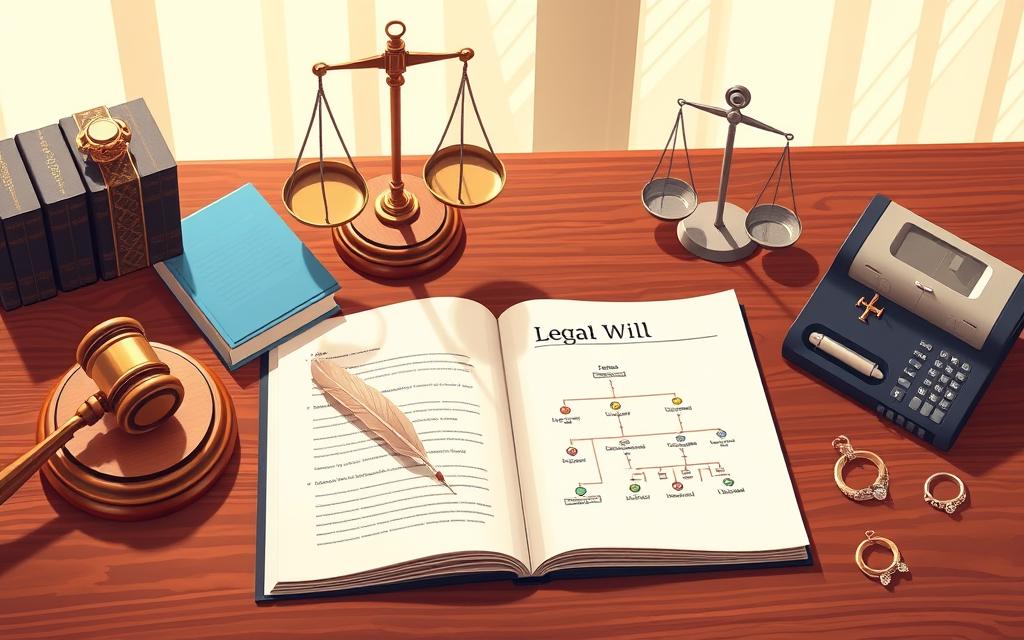
When you make a will, you need to list important things. These things tell who gets what and who takes care of kids.
Personal Information and Identification
Your will needs your personal info to be legal. Make sure to include:
- Full legal name
- Current residential address
- Social Security number
- Date of birth
Comprehensive Asset Distribution Instructions
Listing your stuff clearly is important. You should make a detailed list of:
- Real estate properties
- Financial accounts
- Investment portfolios
- Valuable personal possessions
| Asset Type | Recommended Documentation | Potential Beneficiary |
|---|---|---|
| Real Estate | Property deed copies | Immediate family members |
| Financial Accounts | Bank statements | Designated heirs |
| Investments | Portfolio statements | Specified beneficiaries |
Guardian Designation for Minor Children
Picking guardians is very important. 62% of parents with minor children do not have a will naming guardians. This can cause big legal problems.
Think about:
- Emotional and financial stability
- Shared values and parenting approaches
- Willingness to take on parental responsibilities
- Backup guardian options
By focusing on these points, you can make a strong will. This will protect your loved ones and make sure your stuff goes to the right people.
Types of Wills
Creating a will and estate plan means picking the right legal document. This protects your assets and wishes. Knowing about different wills helps you choose wisely for your estate.
Understanding will types is key in estate planning. Each type has its own role in managing your legacy and honoring your wishes.
Simple Will: A Straightforward Approach
A simple will is the most common for basic estate planning. It includes:
- Instructions on how to share your assets
- Who to take care of your kids if they’re young
- Who to be in charge of your estate
About 70% of American adults don’t have a will. Simple wills are vital for securing your family’s future.
Living Will: Healthcare Decisions
A living will deals with medical care and end-of-life choices. This important document lets you state your healthcare wishes when you can’t speak for yourself.
Testamentary Trust Will: Long-Term Asset Management
A testamentary trust will is for complex estate needs. It’s great for:
- Keeping assets safe for young children
- Helping those with special needs
- Offering financial support in a structured way
Estate planning lawyers suggest picking the right will type based on your unique needs.
Choosing an Executor
Picking the right executor is very important in estate planning. This person helps make sure your wishes are followed and your assets go where you want. They also handle the probate process.
When picking an executor, think about a few key things. The best person should have qualities that help manage your estate well.
Core Responsibilities of an Executor
- Manage and protect estate assets
- Pay outstanding debts and taxes
- Distribute property to beneficiaries
- File necessary legal documents with probate court
- Communicate with beneficiaries and creditors
Essential Qualities to Consider
An effective executor should have:
- Financial acumen for managing complex asset distributions
- Strong organizational skills
- Emotional maturity and objectivity
- Trustworthiness and integrity
- Availability to manage time-consuming responsibilities
Executor Selection Strategies
Estate lawyers suggest carefully checking out who could be a good executor. Look at family, friends, or professional services. The right choice can make the probate process easier and avoid problems.
| Executor Type | Pros | Cons |
|---|---|---|
| Family Member | Knows family dynamics | May be emotionally involved |
| Professional Service | Objective, experienced | Higher associated fees |
| Trusted Friend | Personal connection | Potential lack of financial expertise |
Remember, an executor has big legal duties. It’s important to talk openly about what’s expected and possible problems.
Gathering Necessary Information
Good estate planning needs careful prep and full documents. Making a detailed list of your stuff is key. It makes sure your wishes are clear and followed by law.
Inventory of Personal Assets
Listing your stuff is the base of good inheritance planning. You need to write down all your valuable things and money.
- Real estate properties
- Bank account details
- Investment portfolios
- Retirement accounts
- Vehicles and significant personal property
- Digital assets and online accounts
Comprehensive Beneficiary Documentation
Choosing who gets what is very important. Make sure to list who gets your stuff clearly.
| Asset Type | Recommended Documentation |
|---|---|
| Real Estate | Property deeds, mortgage information |
| Financial Accounts | Account numbers, financial institution details |
| Personal Possessions | Detailed inventory with estimated values |
Documenting Financial Obligations
Every debt must be listed clearly in your estate plan. Knowing your debts helps your executor pay them off right.
- Outstanding loans
- Credit card balances
- Mortgages
- Medical expenses
- Personal debts
About 67% of American adults don’t have a will. This shows how important it is to plan ahead. By listing your stuff and money well, you help your loved ones later.
Legal Requirements for a Valid Will
Making a legal will needs careful steps. Knowing these steps is key to making sure your wishes are followed.

Creating a valid will has important parts. These parts help the person making the will and their loved ones.
Age and Mental Capacity Requirements
To make a legal will, you must meet two main rules:
- Be at least 18 years old
- Show you have a clear mind
Mental capacity means you must know:
- What you own
- Who would get your stuff
- The legal side of your will
Witness Requirements
Most places need certain rules for witnesses:
| Requirement | Details |
|---|---|
| Number of Witnesses | Usually 2 adult witnesses |
| Witness Restrictions | Witnesses can’t get your stuff |
| Witness Verification | Must sign when you’re there |
Notarization Considerations
Notarizing your will can add extra proof. Some places like self-proving wills. These have a notarized affidavit to make things easier.
Talking to an estate planning expert can help. They make sure your will is right and follows the law.
Writing Your Will
Making a will is key to protecting your legacy. It ensures your wishes are followed after you’re gone. You can write it yourself or get help from a lawyer. Knowing how to write a will is important for your family’s future.
DIY vs. Professional Help
There are two ways to make a will: do it yourself or get a lawyer. Think about these points:
- DIY Options:
- Average cost of online will services: $160
- Good for simple estates
- Little legal advice
- Professional Will Attorney:
- Lawyers charge more than $300 per hour
- They offer deep legal knowledge
- Help with complex estates
Utilizing Online Will Tools
Online tools like LegalZoom help you make a will. They start at $99. These tools offer:
- Easy step-by-step guides
- Legal templates for your state
- Basic legal checks
Ensuring Clarity and Specificity
A good will is clear and specific. Experts suggest:
- Use simple, clear language
- Clearly name who gets what
- Give detailed instructions for your assets
- Update your will every five years
Only one-third of adults have a will. Making one helps protect your loved ones and ensures your wishes are followed.
Reviewing and Updating Your Will
Estate planning is a process that needs regular care. Your will and estate legal document should change with your life. This makes sure it shows your current wishes.
Life is full of surprises, and your will must keep up. Experts say you should check your estate planning papers often. This keeps them useful and up-to-date.
Life Changes Triggering Will Updates
- Marriage or divorce
- Birth of children or grandchildren
- Death of a spouse or beneficiary
- Significant changes in financial status
- Acquisition or sale of major assets
Frequency of Will Review
Most lawyers say to check your will every 3-5 years. About 95% of people feel better after updating their estate papers.
Making Amendments to Your Will
For small changes, a codicil can be added to your will. But for big changes, making a new will might be better. Around 60% of Americans don’t have a will updated, which can cause legal problems.
Think about talking to an estate planning lawyer. They can make sure your legal document is good and complete. Updating your will can cost between $300 to $1,200, based on how complex it is.
Finalizing Your Will
Finishing your will needs careful attention to details. This makes sure your will is valid and legally binding. You need to sign it yourself and get two witnesses who don’t get anything from your will. The legal will preparation process is easy if you know what to do.
Signatures and Witnesses
Choosing the right witnesses is key. They can’t get anything from your will. They must be adults who can think clearly. Some places let you make your will easier to prove with a special affidavit.
Storage Options for Your Will
Keeping your will safe is very important. You can use a fireproof safe, a bank box, or give it to your lawyer. More people are choosing digital storage now. Make sure your executor knows where it is to avoid problems later.
Informing Family Members
Even though many people don’t have a will, it’s good to tell your family about yours. Talk to your executor and main beneficiaries to avoid fights. Update your will every few years or after big changes in your life.


